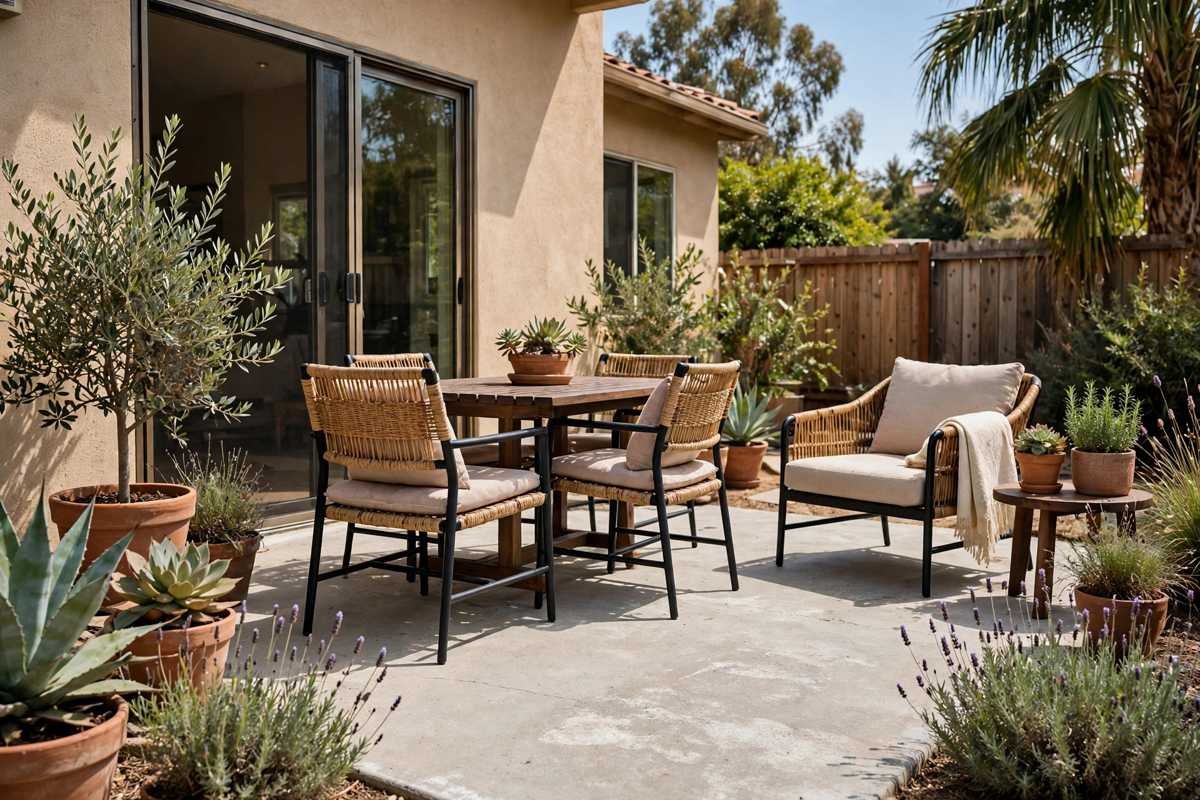
A concrete patio turns a backyard into a place to use, not just a space to look at. It gives a home in Burbank or Glendale a level surface for outdoor dining, relaxing, and entertaining. Done well, a patio can be enjoyed for many years. Done poorly, it can crack, hold water, or slope the wrong way.
Concrete patio contractors in Burbank, CA work with homes across the San Fernando Valley. The best results come from planning the patio around the site itself: its drainage, access, ground conditions, size, and shape.
Planning a Concrete Patio
Good planning before any concrete is poured prevents most problems that appear later.
Site Inspection
The first step is a site inspection. The contractor looks at drainage, access for equipment, and ground conditions. Where does water go when it rains? Does the ground slope toward the house? Is there enough room for trucks and tools to reach the backyard? These questions shape the design, the slope, and the preparation work.
Size, Shape, and Layout
A small patio may be enough for a table and a few chairs, while a larger one can hold a seating area, a grill, and room to move around. The layout should suit how the household actually uses the space, and it should connect sensibly with doors, paths, and the garden.
Slope and Drainage Direction
Drainage is one of the most important parts of patio design. A patio should slope gently away from the house so rainwater runs off rather than pooling on the surface or flowing toward the building. The slope must be planned as part of the layout, not left to chance.
The Concrete Patio Installation Process
Once the plan is set, installation follows a clear sequence, and each step builds on the one before it.
Site Preparation and Old Concrete Removal
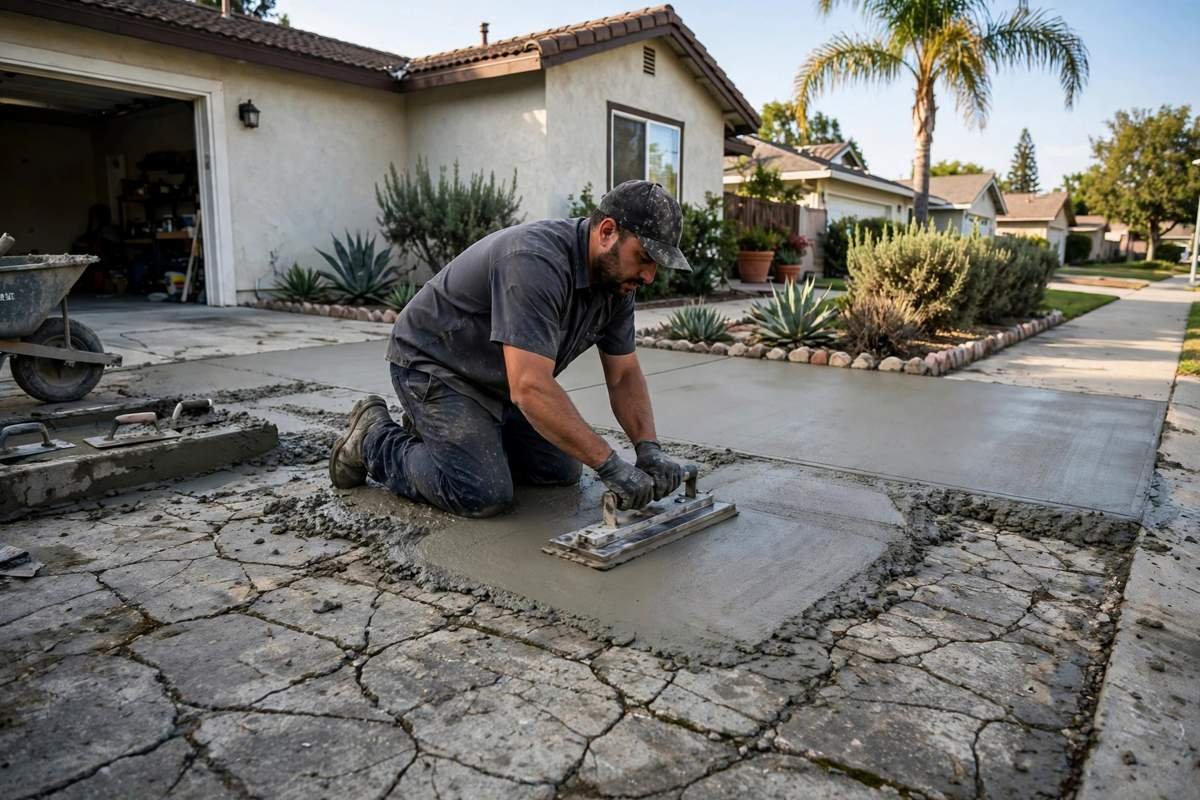
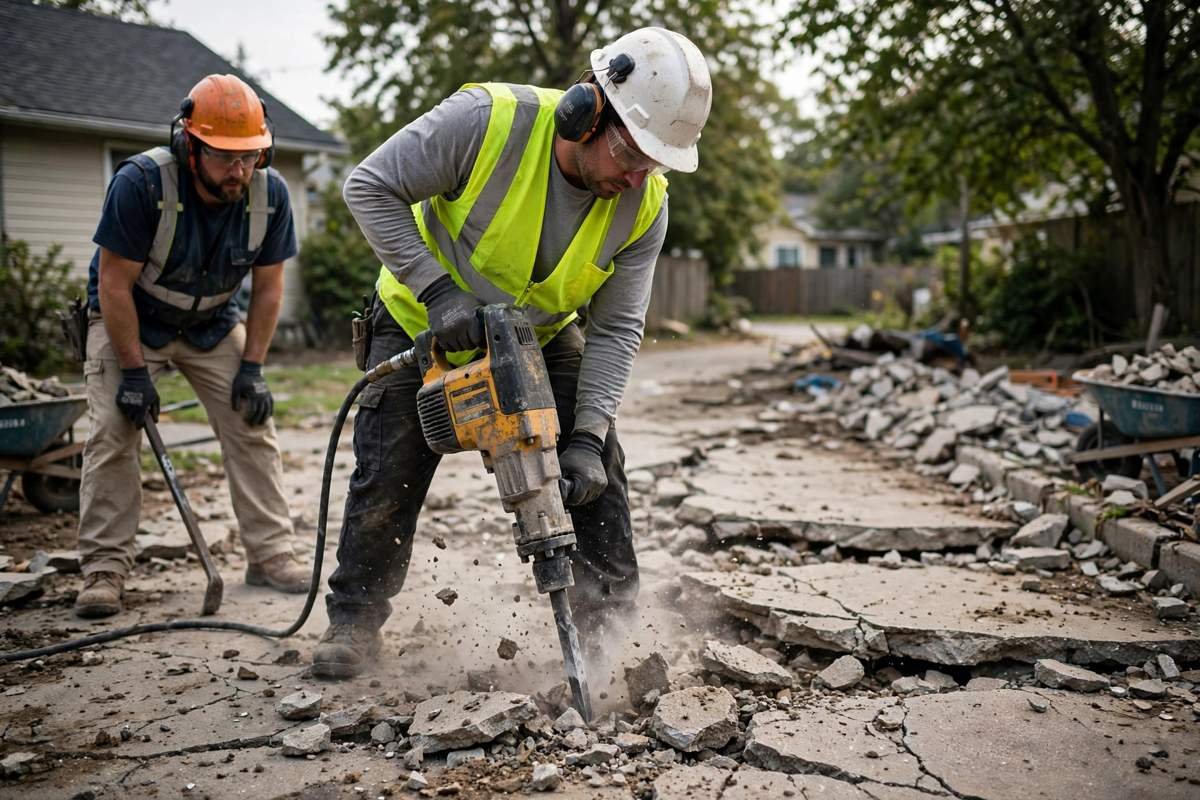
The area is cleared and prepared. If an old patio is being replaced, it is removed from the site. The ground is then graded to the planned slope, and any soft or unstable soil is addressed so the new patio has a firm foundation.
Compacted Base
A layer of aggregate base is placed and compacted. This compacted base supports the slab, helps it stay level, and reduces the risk of settling and cracking. A patio built on a weak base is far more likely to develop problems.
Forms and Layout
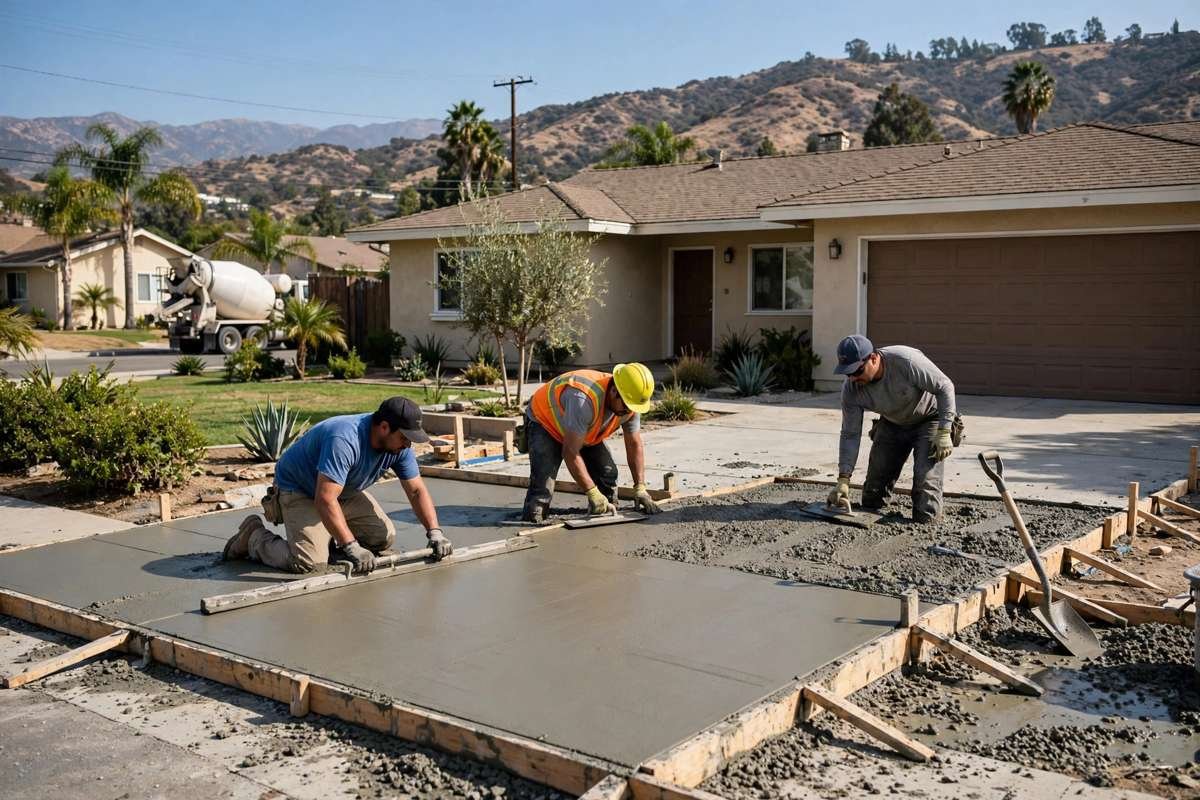
Forms define the size and shape of the patio, following the planned layout. They also set the slope and drainage direction, so the finished surface sheds water correctly. Control joints are planned at this stage: deliberate grooves that give the concrete a controlled place to crack as it cures and as temperatures change.
Pour, Level, and Finish
Fresh concrete is poured into the forms, spread evenly, and levelled. The surface is worked to the chosen finish, and control joints are cut or formed while the concrete is still workable. A broom finish gives a textured, slip-resistant surface that works well outdoors. Stamped concrete can imitate stone, brick, or tile patterns. Exposed aggregate reveals the natural stone in the concrete.
Control Joints and Sealer
Control joints help manage cracking by giving the concrete planned lines along which it can move. After the concrete has cured, a sealer can be applied to help protect the surface from stains and weather, and to keep the colour and finish looking their best.
What Affects the Cost of a Concrete Patio?
Cost depends on several factors. Size is the most direct: a larger patio uses more concrete and labour. Site preparation matters too, since a site needing old concrete removal, extensive grading, or drainage work involves more effort than a clear, level area. The finish and design also affect cost. A straightforward broom finish is generally the most economical option, while stamped or exposed aggregate finishes involve additional materials and work. Drainage requirements can add to the cost as well. Because these factors vary from one property to another, a reliable estimate comes from an inspection of the specific site in Burbank or Glendale.
Stamped Concrete vs Pavers
Stamped concrete is a continuous surface with patterns and colours pressed into it, so it can resemble stone or brick while remaining a single slab. Pavers are individual pieces laid one by one, allowing a damaged piece to be replaced on its own. Stamped concrete generally has fewer joints where weeds can grow, while pavers offer flexibility in pattern and easier spot repairs.
How Long Does a Concrete Patio Last?
A properly installed and maintained patio lasts many years. Proper drainage, curing, sealing, and maintenance all extend its life, and cleaning and addressing small cracks early prevents minor issues from growing. Cracking can be reduced by proper preparation, a stable base, reinforcement where needed, control joints, good drainage, and proper curing.
Frequently Asked Questions
How much does a concrete patio cost in Burbank or Glendale?
The cost depends on size, site preparation, finish, design, and drainage work. A larger patio, a decorative finish, or a site needing extra grading costs more than a small, straightforward installation. An on-site inspection gives the most accurate estimate.
How long does a concrete patio installation take?
It depends on the size of the patio and the preparation needed. The pour is usually completed in a day for a typical residential patio, but curing time must be allowed before heavy use.
Can I put a concrete overlay over my old patio?
It depends on the condition and stability of the old patio. If it is sound and stable, an overlay may be possible. If it is cracked or sinking, replacement is usually better. An inspection will tell you which applies.
How do I stop water pooling on my patio?
Proper slope and drainage direction are the key. A patio should slope gently away from the house so water runs off. Good drainage planning during installation, and keeping the surface and drains clear, helps prevent pooling.
Conclusion
A concrete patio is a practical addition to a home in Burbank, Glendale, and across the San Fernando Valley, giving the household a durable outdoor space for everyday use. Its success depends on careful planning: a proper site inspection, a compacted base, the right slope and drainage, a suitable finish, control joints, and enough curing time. With those elements in place, and with sealing and basic maintenance, a patio can serve a family well for many years.
If you are planning a new patio or thinking about replacing an old one, contact Wall Brothers Construction for a free estimate. Our team can inspect your backyard, discuss designs and drainage, and plan a concrete patio that fits your home and the way you use it.