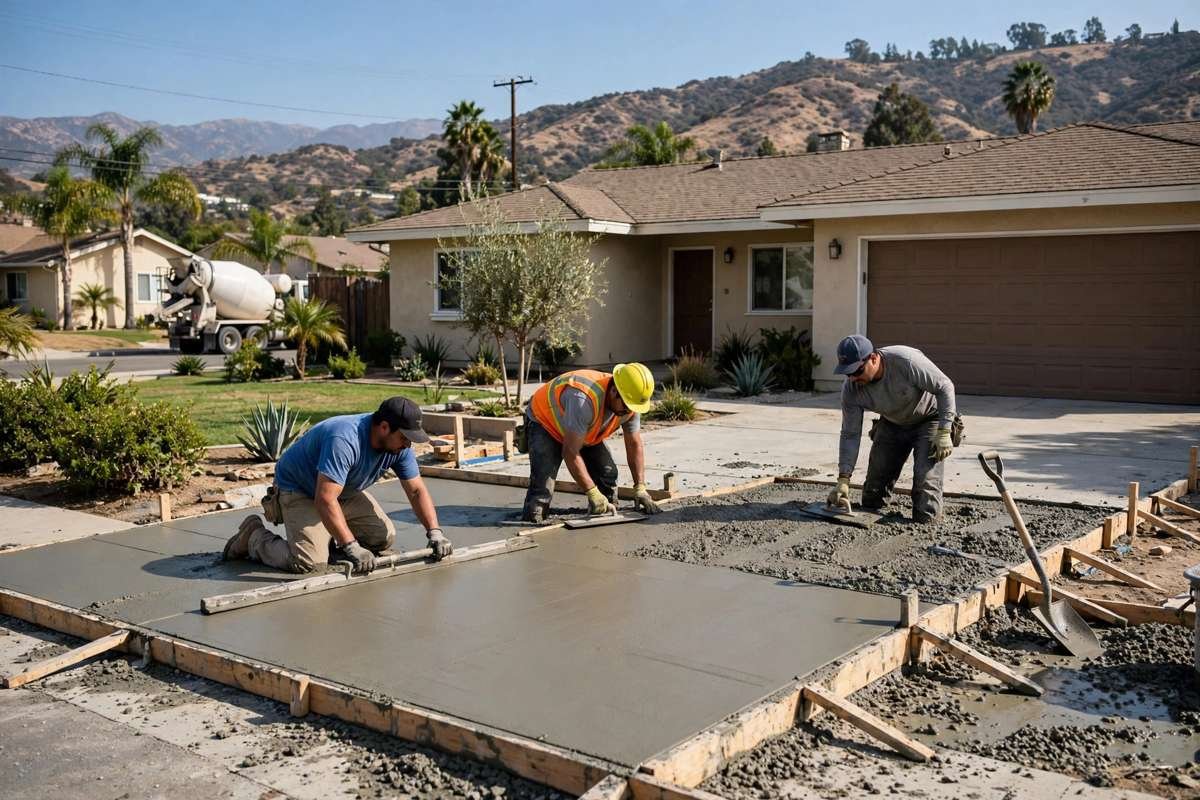
A concrete driveway carries cars every day, stands up to summer heat, and sets the first impression for visitors. When a driveway in Chatsworth, Northridge, or Granada Hills starts to crack, sink, or break apart, homeowners face the same question: repair it, or replace it?
Concrete driveway contractors in San Fernando Valley see both situations regularly. Some driveways need only targeted repairs. Others have widespread cracking, drainage problems, or a failed base, and replacement is the more practical choice. Understanding the process, thickness, cost, and curing helps homeowners plan with confidence.
When a Driveway Needs Replacement
Not every crack means replacement. Hairline surface cracks are common and do not always affect strength. Replacement is worth considering when damage is more serious: large cracks across the slab, sections that have sunk or lifted, a crumbling surface, or water pooling after rain. A driveway patched many times, with new cracks appearing soon after each repair, may also be a candidate.
A site inspection is the best way to tell the difference. A contractor looks at the concrete, checks drainage and slope, and assesses the ground underneath. That inspection guides the recommendation and the plan for the new driveway.
The Concrete Driveway Installation Process
A well-built driveway follows a clear sequence, and each step supports the next.
Inspection and Planning
Every project starts with an inspection of the existing driveway and the site: the size of the area, access for trucks and equipment, drainage, and ground conditions. This is also the time to discuss layout, finish, and any changes to width or slope.
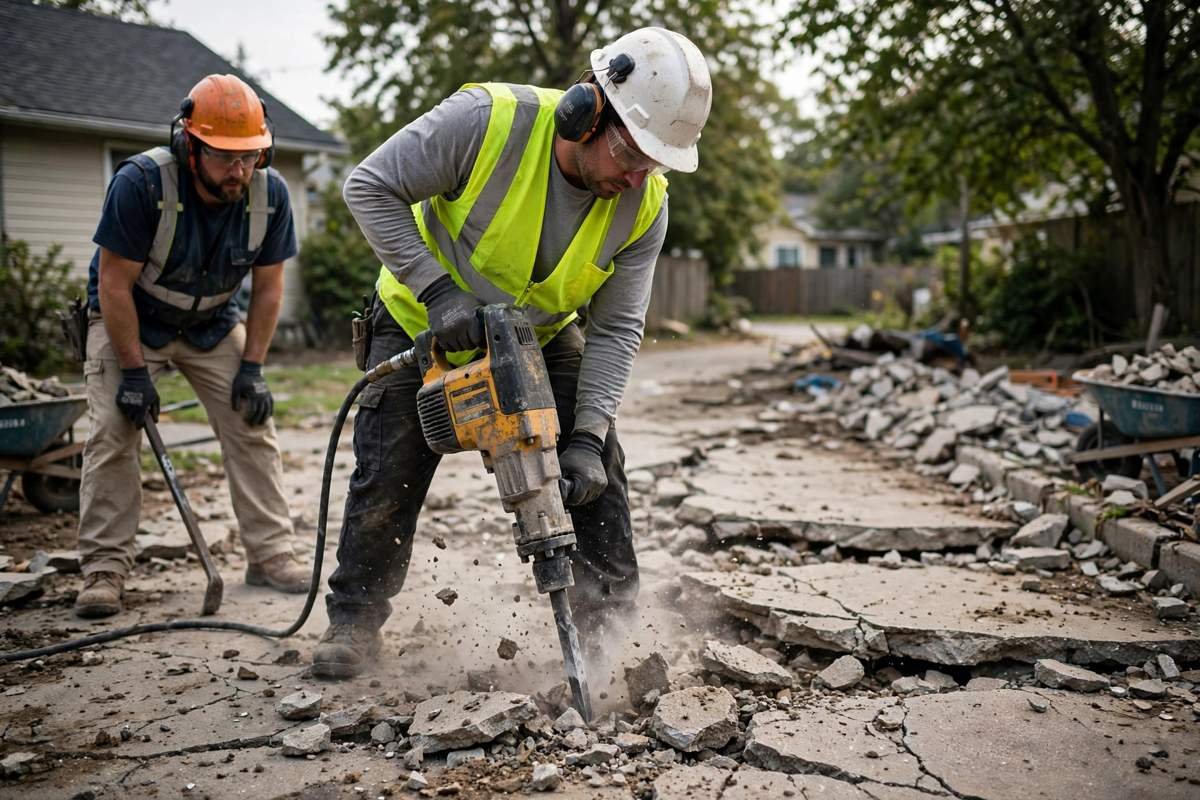
Tear-Out and Haul-Away
When an old driveway is replaced, the damaged concrete is broken up, removed, and hauled away. Clearing the old slab completely allows the new driveway to be built on a prepared base rather than on top of failing material.
Site Preparation and Compacted Base
Site preparation is one of the most important parts of the job. The ground is graded so water drains away from the house and garage, and a layer of aggregate base is placed and compacted. A stable base helps the slab stay level and reduces the risk of cracking and settling.
Forms and Reinforcement
Forms define the shape and edges of the driveway. Reinforcement, such as rebar or wire mesh, is placed inside the forms to help the slab handle loads and resist cracking. The type and placement depend on the project requirements and the loads the driveway is expected to carry.
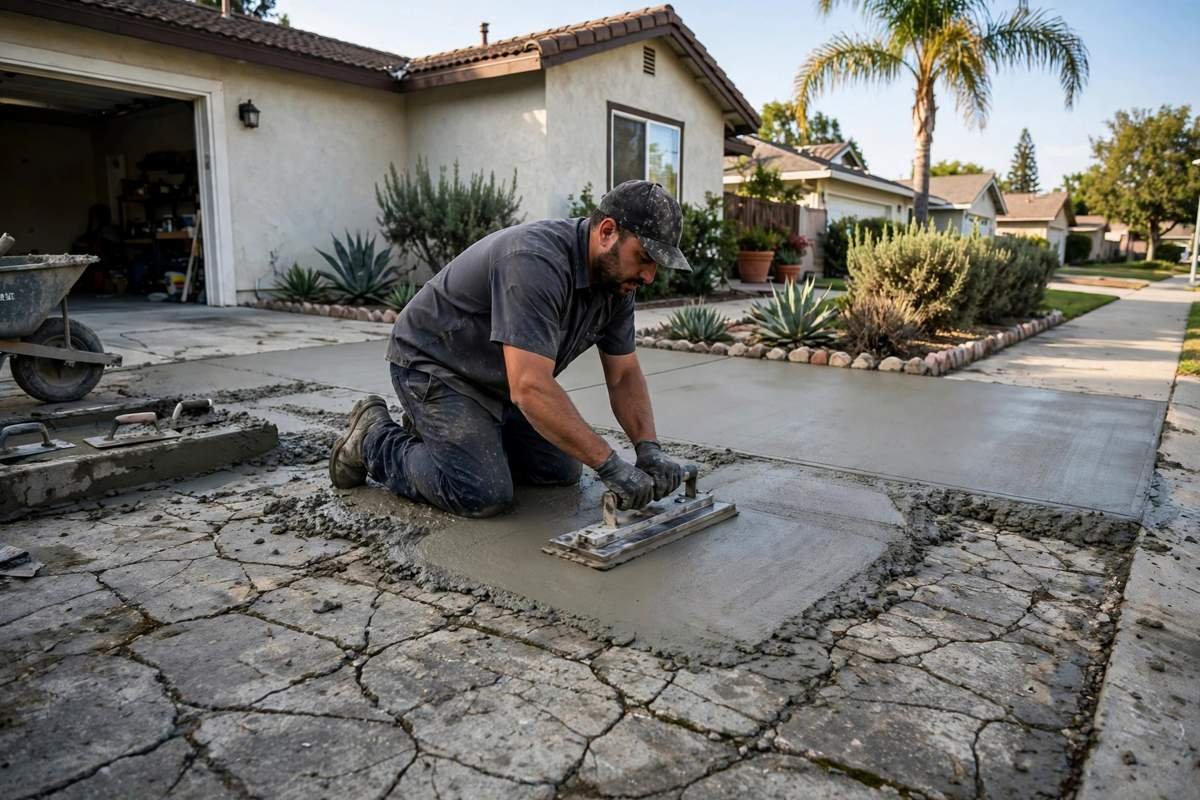
Pour, Level, and Finish
Fresh concrete is poured into the forms, spread evenly, and levelled, then finished in the chosen style. A broom finish gives a textured, slip-resistant surface that suits most driveways. Exposed aggregate shows the natural stone in the concrete. Stamped concrete can imitate stone, brick, or tile patterns while remaining a continuous surface.
Curing Before Vehicle Use
After finishing, the concrete needs time to cure and gain strength. Curing is not the same as drying on the surface; it is the process by which concrete hardens and develops its full strength. A new driveway should not be used by vehicles until it has cured enough to carry their weight. The contractor will advise on the waiting period for foot traffic and for vehicles.
Final Inspection and Cleanup
Once the driveway has cured, a final inspection checks the finish, edges, joints, and drainage. The work area is cleaned up, and the driveway is ready for regular use.
How Thick Should a Concrete Driveway Be?
There is no single thickness for every driveway. Thickness depends on the expected vehicle load, site conditions, and project requirements. A driveway used only by passenger cars has different needs from one that regularly carries heavier vehicles such as delivery trucks. Soft or unstable soil may also call for a thicker slab or extra base preparation. A contractor considers these factors during the inspection and recommends a thickness that fits how the driveway will actually be used.
What Affects the Cost of a Concrete Driveway?
Cost depends on several factors. Size is the most obvious: a larger driveway uses more concrete, base material, and labour. Site preparation also affects cost, since a site needing extensive grading, or tear-out and haul-away of a large old slab, involves more work than a straightforward installation on clear ground. The finish matters too: a standard broom finish is generally the most straightforward option, while exposed aggregate and stamped concrete involve additional materials and labour. Reinforcement, access, and drainage work can also affect the total. Because of these variables, a reliable estimate comes from an inspection of the specific property. Permit needs vary by location and scope, so confirm what applies to a project in Chatsworth, Northridge, Granada Hills, or elsewhere in the San Fernando Valley before work begins.
Concrete vs Pavers
Concrete provides a durable continuous surface with fewer joints where weeds can grow, and it can be finished in several styles. Pavers offer design flexibility and replaceable sections: if one paver is damaged, it can be lifted and replaced without redoing the whole driveway. The choice often comes down to appearance, maintenance, and cost, and a contractor can explain how each option would perform on a particular property.
Frequently Asked Questions
How long does a concrete driveway installation take?
It depends on the size of the driveway, the amount of tear-out and site preparation, and the weather. The pour is usually completed in a day for a typical residential driveway, but curing time must be added before vehicles can use it.
When can I drive on a new concrete driveway?
Not until the concrete has cured enough to handle vehicle weight. The waiting period depends on the mix, thickness, and weather, and your contractor will advise when foot and vehicle traffic are safe.
Do I need a permit for a driveway replacement in the San Fernando Valley?
Permit needs vary by location and scope. Confirm the requirements for your property and project before work begins.
What causes concrete driveways to crack?
Ground movement, a weak or poorly compacted base, heavy loads, water under the slab, or temperature changes can all cause cracking. Proper preparation, a stable base, reinforcement, and control joints help reduce the risk.
Is stamped concrete a good choice for a driveway?
Yes, when a decorative appearance is wanted. It offers patterns and colours while remaining a continuous concrete surface, and it needs the same sound base, reinforcement, and curing as any other concrete driveway.
Conclusion
A concrete driveway is a long-term investment, and its quality depends on the groundwork as much as on the concrete itself. Careful inspection, proper site preparation, a compacted base, the right reinforcement and thickness, and enough curing time all contribute to a driveway that stands up to daily use in Chatsworth, Northridge, Granada Hills, and across the San Fernando Valley.
Contact Wall Brothers Construction for a free estimate if your driveway is cracked, sinking, or no longer draining properly. Our team can inspect it, explain your options, and plan an installation or replacement that fits your home.