A whole-home renovation — taking a house down to the studs and rebuilding it — is the closest thing to a new home without moving. However, it’s also one of the most complex residential projects you can undertake: a dozen trades, months of sequencing, and six-figure budgets. As a result, this guide from experienced whole house remodel contractors walks through the gut rehab process phase by phase, realistic costs in California, and how to budget without nasty surprises.
Gut Rehab Cost in California
- Moderate whole-home remodel (kitchens, baths, floors, systems updates): $150,000 – $400,000
- Full gut rehab (down to studs, new MEP, reconfiguration): $250,000 – $700,000+
- Per-square-foot rule of thumb: $150 – $350/sq ft for comprehensive renovations
This is because older homes hide conditions (outdated wiring, galvanized plumbing, asbestos/lead remediation) that add 10–20% once walls open.
Phase-by-Phase Project Plan
1. Demolition (1–3 weeks)
Strip interiors to the planned level — full gut or selective. In addition, hazardous material surveys and abatement come first in pre-1978 homes.
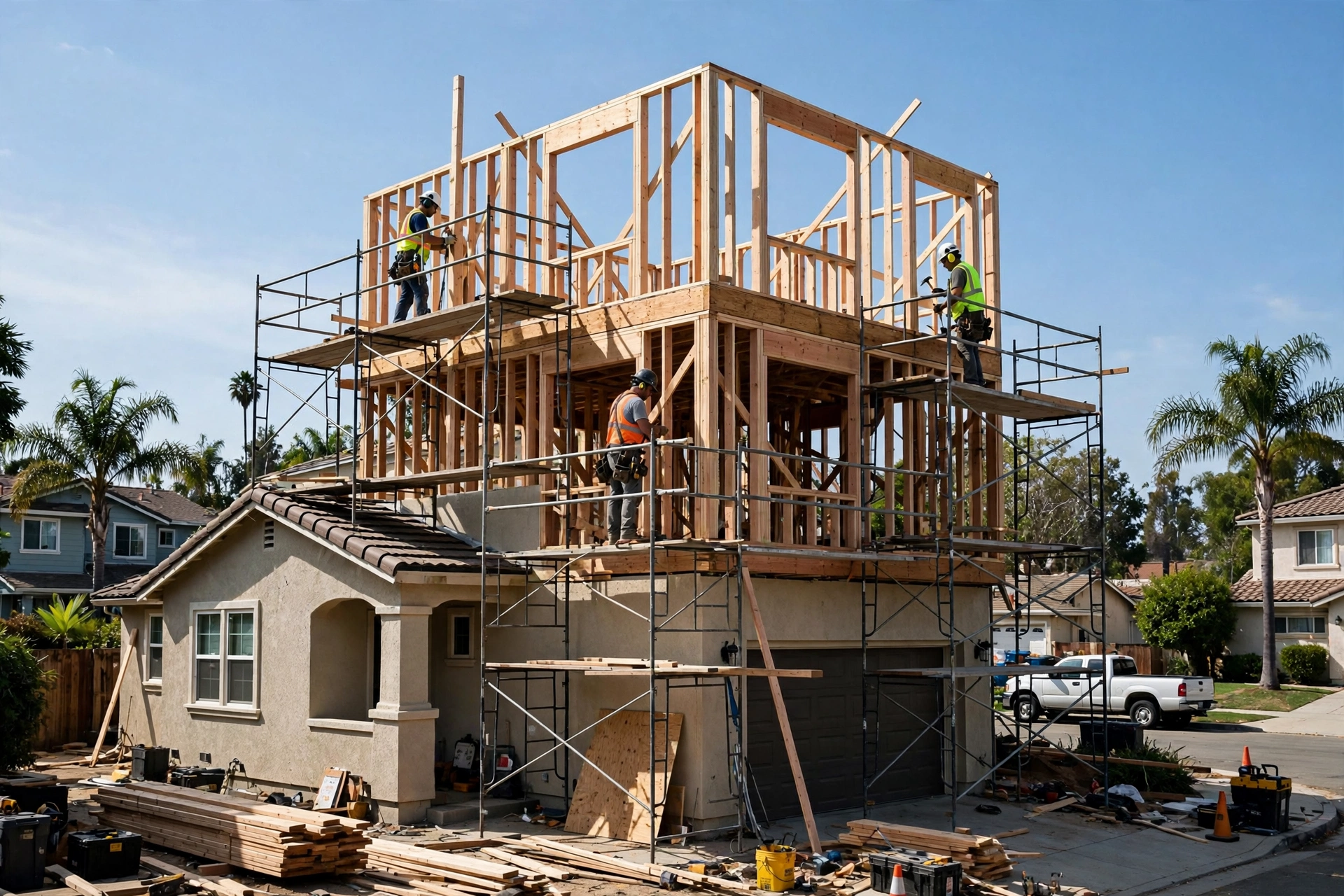
2. Structural and framing (2–6 weeks)
For example, new walls, beam installations for removed walls, subfloor repairs, and seismic retrofitting. Inspections at each structural milestone.
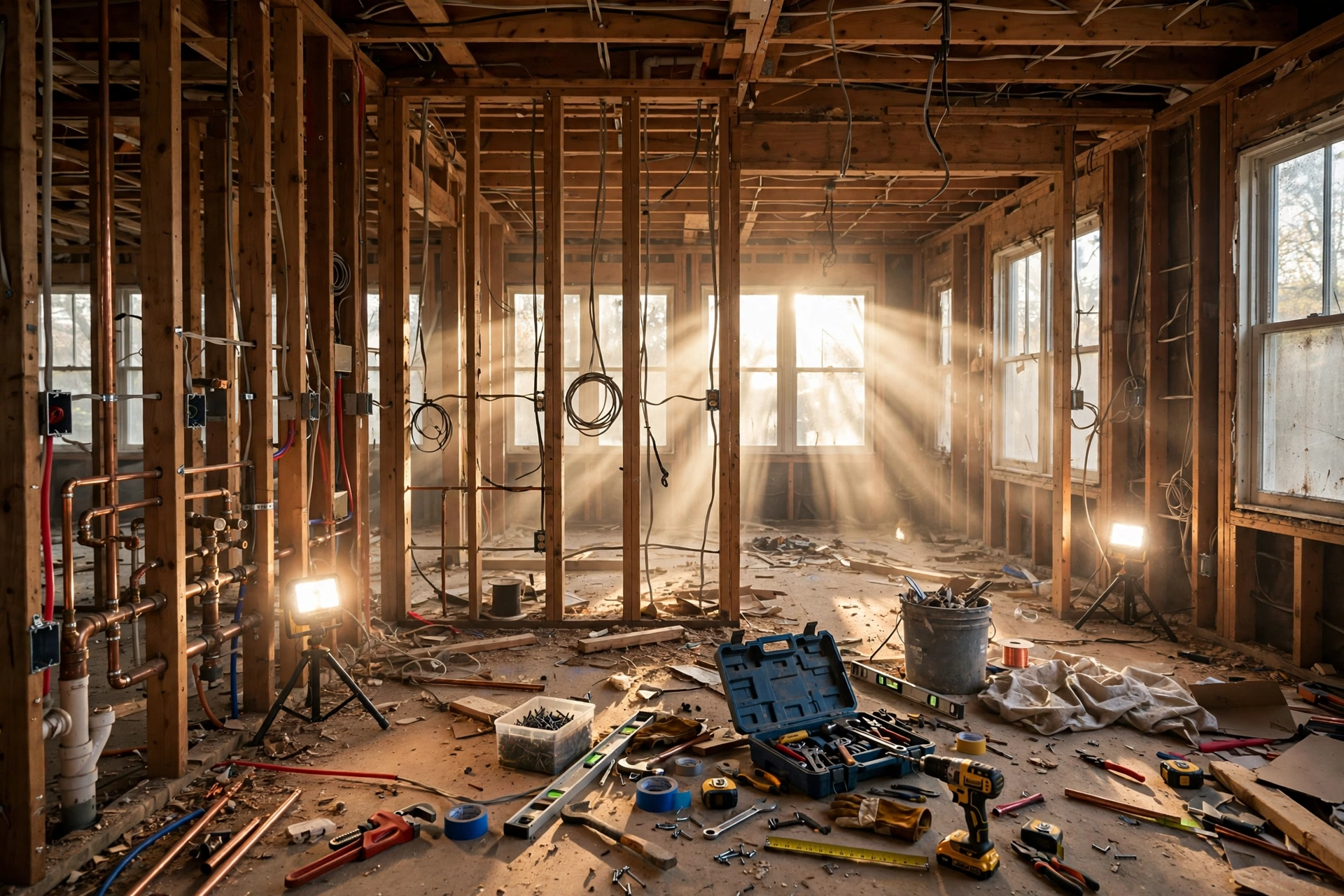
3. Rough-in trade work (4–8 weeks)
Plumbing, electrical, and HVAC rough-ins go in before insulation and drywall. Therefore, this is the “bones” phase — mistakes here are expensive to fix later, so inspections matter.
4. Insulation and drywall (2–4 weeks)
Insulation (meeting California Title 24), then drywall hang, tape, and texture.
5. Finishes (6–12 weeks)
The longest visible phase: flooring, tile, cabinets, countertops, trim, paint, fixtures. Consequently, finish material lead times should be ordered months earlier.
6. Punch list and finals (1–3 weeks)
Finally, final inspections, touch-ups, and certificate of occupancy/completion.
Complete House Remodel Timeline
In total, 5–10 months of construction for most whole-home projects, plus 2–4 months for design and permits. Add 20% buffer to any timeline you’re given. This is because material delays and inspection scheduling are the usual culprits.
Permit Scheduling: Getting Ahead of the Line
Above all, submit early and submit complete. This is because California plan-check cycles run 4–12 weeks per round, and incomplete submittals restart the clock. Experienced general contractors for whole-house remodels pre-coordinate with plan checkers and schedule inspections the moment each phase is ready — idle days between inspection sign-off and next trade are pure waste.
Contingency Planning: The 15–20% Rule
Every gut rehab finds surprises. For example, budget a 15–20% contingency above the contract price and don’t spend it mentally on upgrades. Common hits: dry rot, termite damage, undersized electrical service, foundation issues, and code-required upgrades triggered by the remodel scope (smoke/CO detectors, seismic anchoring).
Frequently Asked Questions
Should we move out during a whole-home renovation?
In general, for full gut rehabs, yes — it’s faster, cheaper (no phasing overhead), and far less miserable. So budget temporary housing into the project cost.
Is a whole-home renovation better than buying new?
In California’s market, often yes: you keep your location and Prop 13 basis while getting essentially new systems and finishes. However, compare honest all-in costs both ways.
How do I keep the project on schedule?
First, finalize all finish selections before demolition. This is because change orders and material delays cause most overruns — discipline at the start pays off for months.
Considering a full-home transformation? Contact Wall Brothers Construction for a phased plan, realistic timeline, and a budget built on California experience.