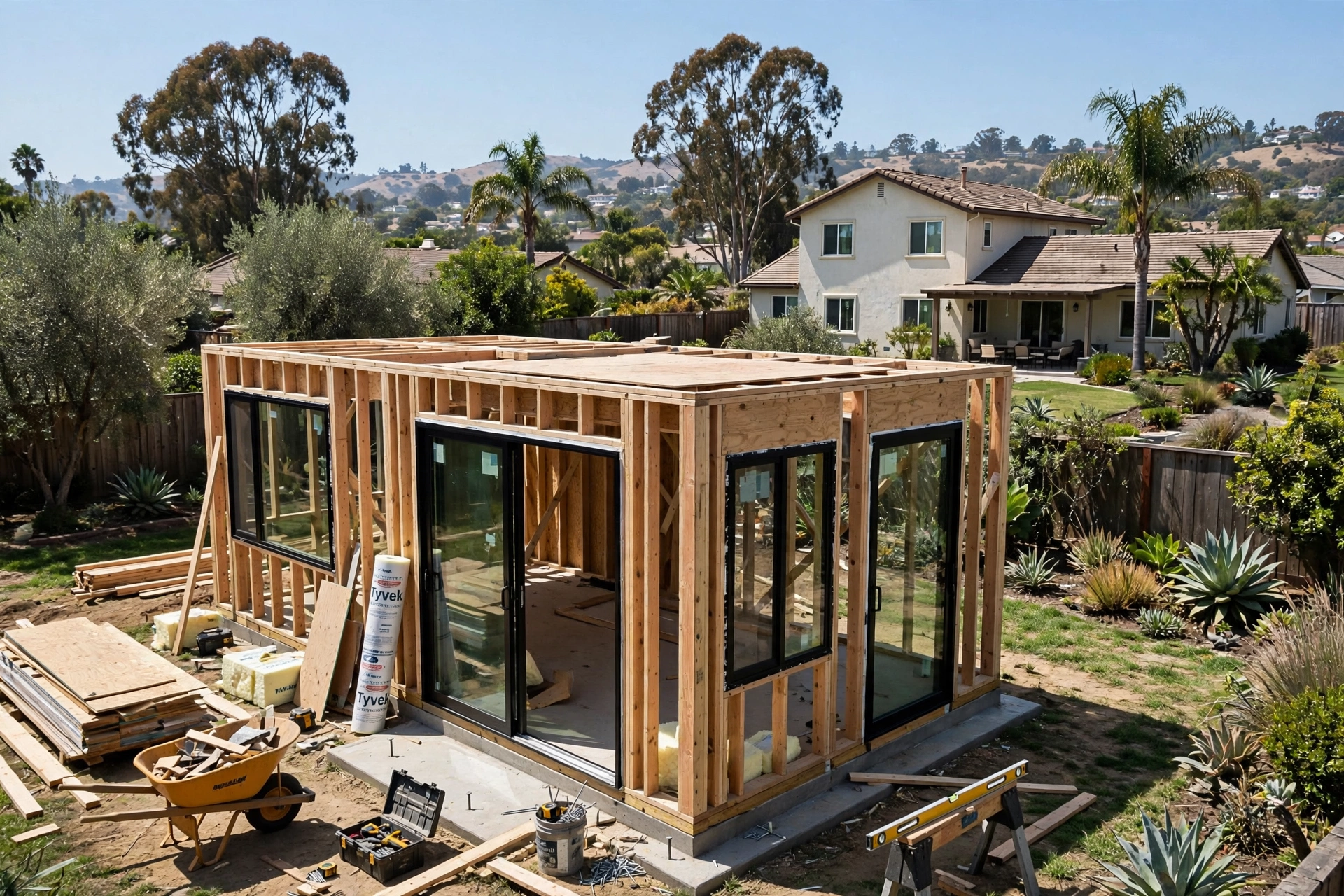
Accessory Dwelling Units (ADUs) are California’s biggest housing opportunity for homeowners: a second home on your lot that can house family or generate rental income. Thanks to state laws like SB 9 and successive ADU reforms, building one is easier than ever. However, “easier” doesn’t mean simple. As a result, this guide covers ADU construction in California: regulations, permits, costs, and the construction steps from planning to move-in.
California ADU Law: What SB 9 and State Reforms Changed
California has systematically removed barriers to ADUs: ministerial (no discretionary hearing) approval for qualifying units, reduced or eliminated parking requirements near transit, capped impact fees, and protections against HOA bans. Key current rules:
- Size: up to 800–1,200 sq ft depending on type and local rules; detached ADUs up to 16–18 ft tall in many jurisdictions.
- Setbacks: as little as 4 ft side and rear setbacks for qualifying ADUs.
- Owner-occupancy: state law currently waives owner-occupancy requirements (check current law — this has sunset dates).
- SB 9 lot splits: separate from ADUs, SB 9 allows qualifying single-family lots to be split — a bigger play with more requirements.
Local cities can still add their own requirements within state limits. Therefore, always verify with your jurisdiction.
Cost to Build an ADU in California
- Garage conversion ADU: $100,000 – $200,000 (structure exists; costs go to conversion, utilities, finishes)
- Attached ADU / addition: $200,000 – $350,000
- Detached new-construction ADU: $250,000 – $500,000+ depending on size and finishes
Per-square-foot costs run higher than primary homes. This is because kitchens and bathrooms — the expensive rooms — dominate a small footprint.
Garage Conversion vs. Detached ADU
Garage conversions are the fastest, cheapest path: the shell exists, and you’re adding insulation, HVAC, plumbing, and finishes. However, downsides exist: you lose the garage, ceiling heights can be tight, and slab/foundation upgrades are common. In contrast, detached ADUs cost more but offer better layouts, natural light, privacy, and higher rental value. For maximum rental income, detached wins; for fastest payback, garage conversion wins.
California ADU Permit Timeline
State law requires jurisdictions to act on ADU permits within 60 days for qualifying projects. However, the clock only runs on complete applications, and pre-application design/engineering takes 2–4 months. Realistic total: 3–5 months for permits, 5–8 months construction. As a result, choose a contractor who knows your city’s ADU process — incomplete submittals are the #1 delay.
Rental Income Potential
For example, a well-built ADU in California’s metro markets can rent for $1,500–$3,500+/month depending on size and location. At those numbers, many ADUs pay for themselves in 8–15 years while adding $200,000–$400,000+ in property value. Consequently, run the numbers with your tax advisor — depreciation and cost segregation can improve the picture further.
Utility Hookups: Water, Sewer, and Power
ADUs generally don’t require separate utility connections — they can share the primary home’s water, sewer, and electrical service, though many jurisdictions require or encourage sub-metering. In addition, electrical panel upgrades are common (ADUs add real load), and sewer lateral capacity should be verified early. Therefore, budget $10,000–$30,000 for utility work.
Construction Steps: From Plans to Move-In
- Feasibility: first, confirm setbacks, size limits, and utility capacity for your lot.
- Design and engineering: floor plans, structural, Title 24 energy compliance.
- Permits: submit a complete package; respond to corrections fast.
- Site work and foundation: grading, trenching, foundation or slab.
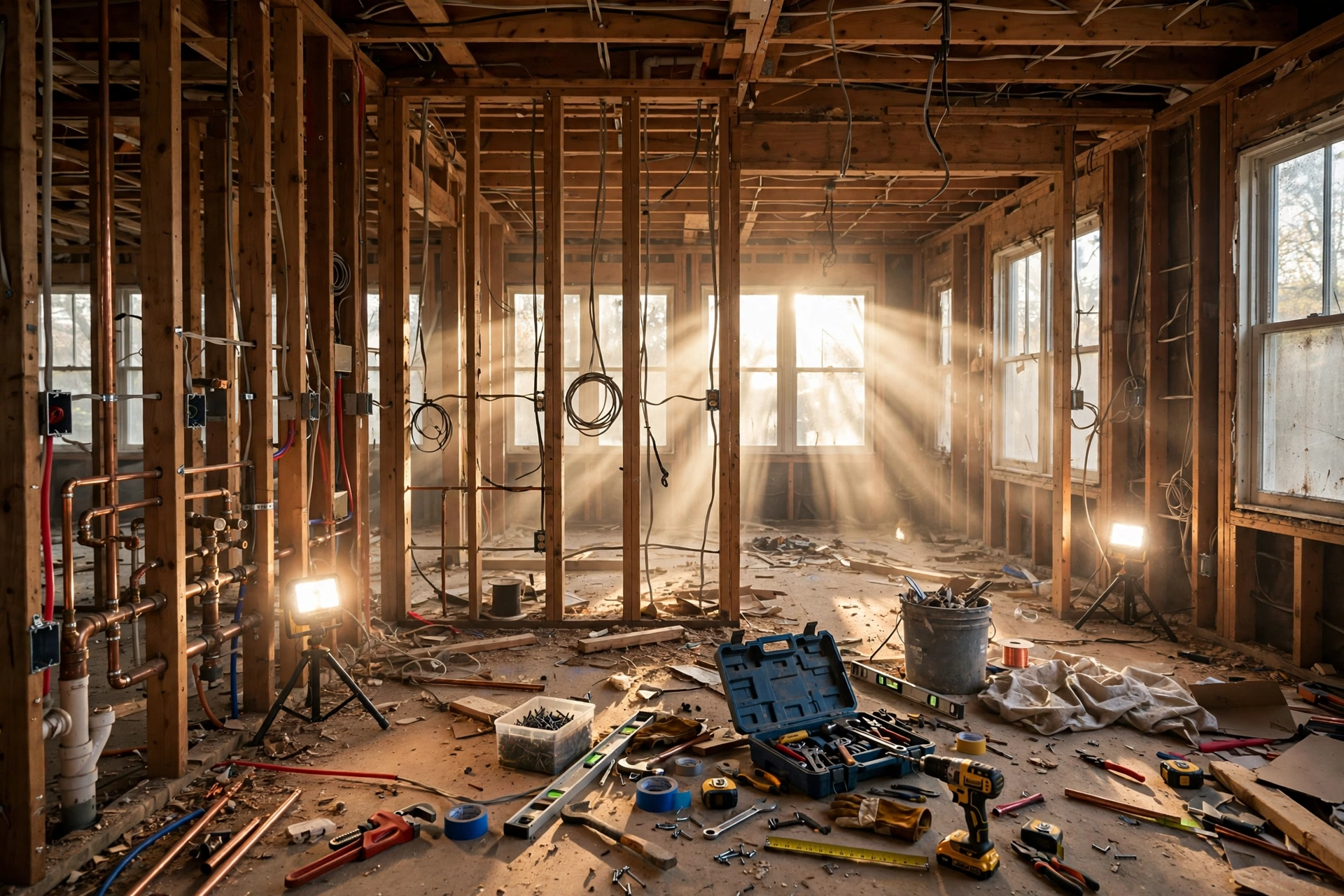
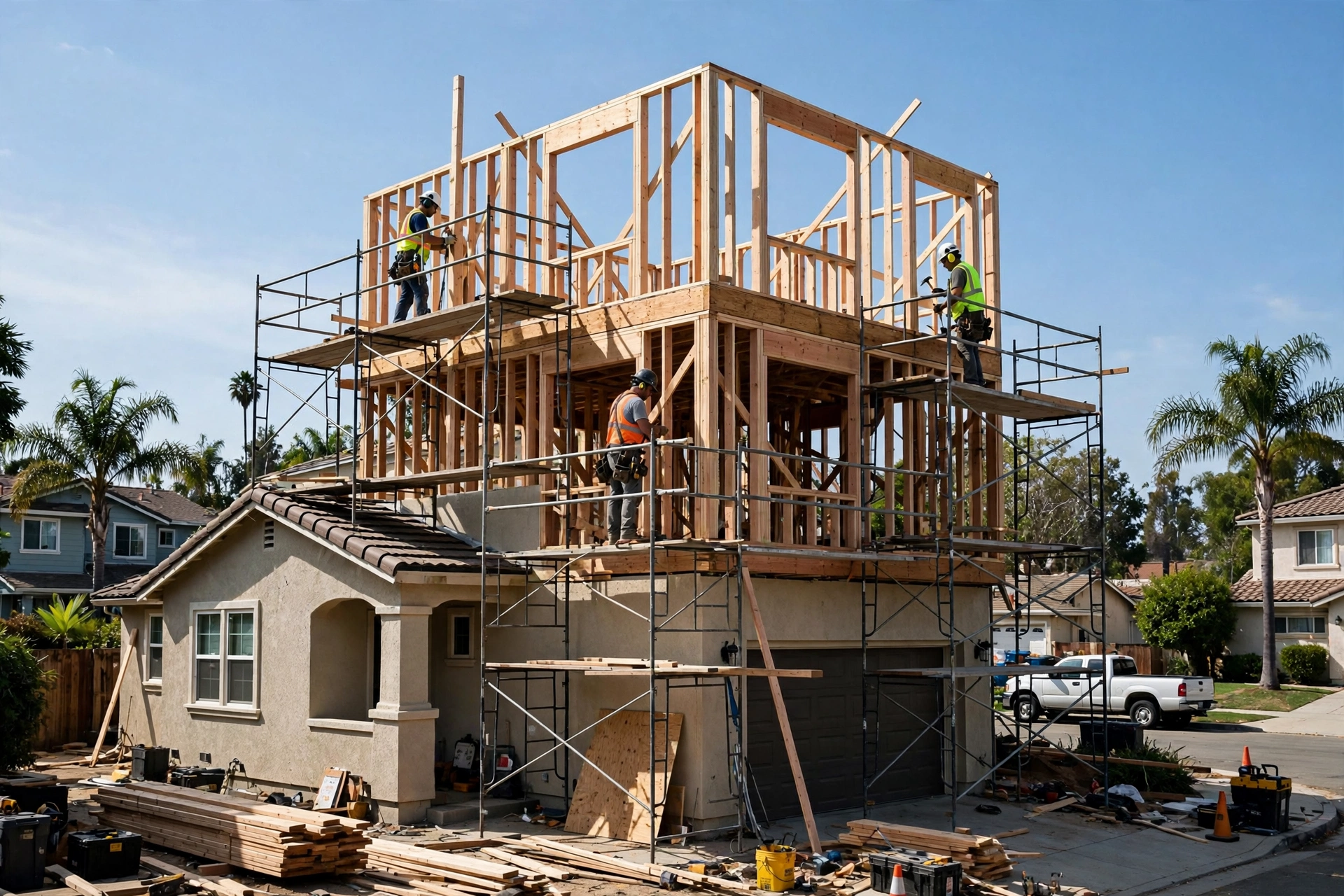
- Framing through finishes: the standard residential sequence, compressed.
- Final inspections and certificate of occupancy: finally, pass inspections and get the certificate of occupancy.
Frequently Asked Questions
Can I build an ADU on any California lot?
In general, nearly any single-family zoned lot qualifies, subject to size, setback, and height rules. Multifamily properties have their own ADU allowances. A feasibility check is cheap insurance.
Do ADUs increase property taxes?
Yes — the added value is reassessed. However, under Prop 13 the increase is limited to the ADU’s value, not a full reassessment.
How do ADUs affect a future home addition?
Because ADUs count toward lot coverage and FAR limits, plan ahead if you also want a home addition later.
Thinking about an ADU? Contact Wall Brothers Construction for a lot feasibility review and a realistic cost and timeline.